)
)
01 Jul 2026
HardLine Performance Ducting
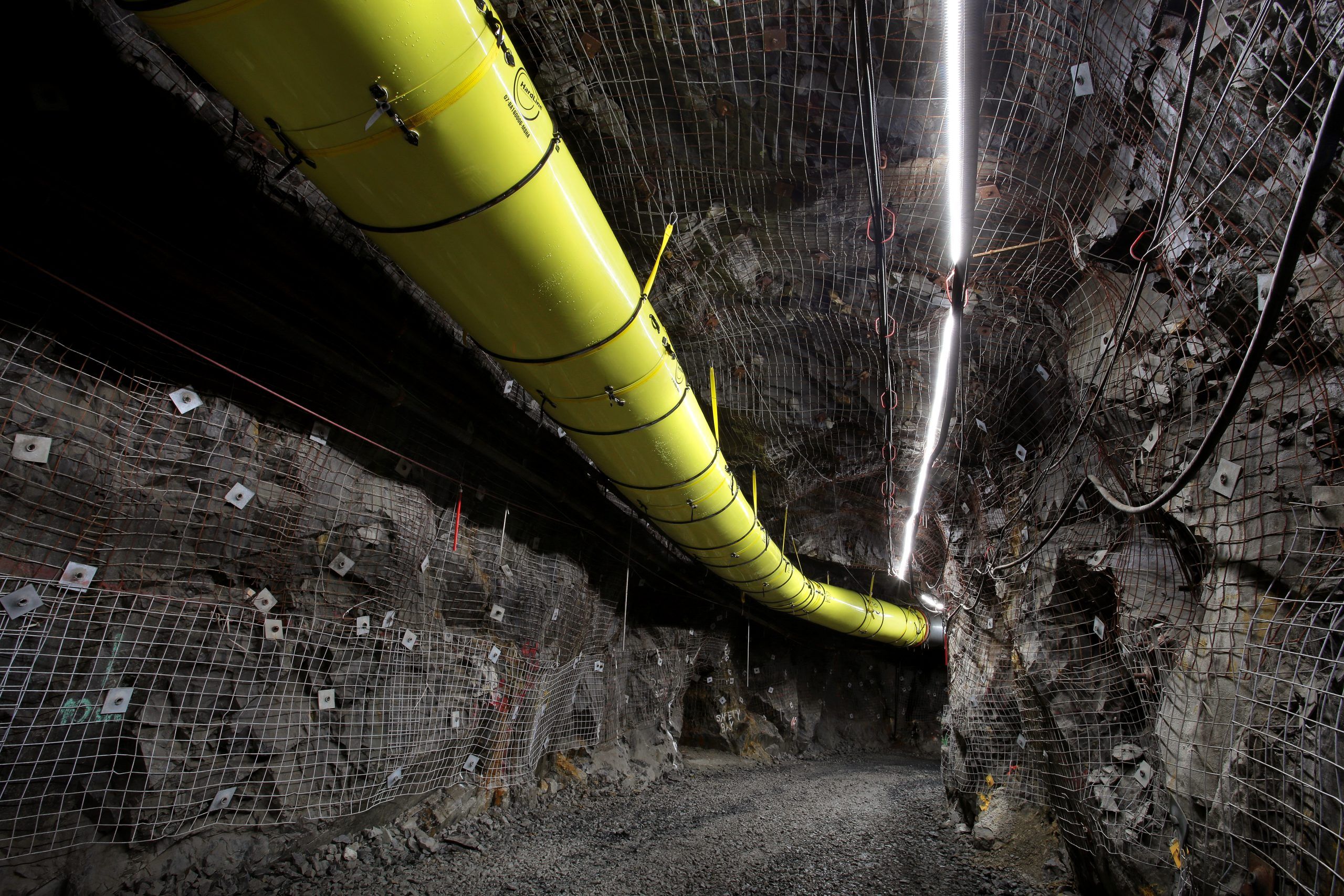
HardLine™
Performance Ducting
Engineering
the Future of Underground Ventilation
Moving More
Air. Using Less Energy. Advancing Towards Zero Harm.
Every tonne
mined begins with one invisible resource.
Air.
Before the
first blast is fired, before the first machine starts, before a single miner
enters the heading, a mine depends on a ventilation system capable of
delivering fresh air safely, efficiently and reliably.
For
generations, auxiliary ventilation has relied on technologies that have changed
very little. Steel ducting, fiberglass columns and flexible lay-flat ducting
have served the industry well, but they were developed for an era where
ventilation was simply viewed as a necessity, not as an engineered opportunity.
Today,
mining faces new challenges. Greater depths, higher temperatures, increasing
energy costs, stricter environmental expectations, higher production demands,
and above all else, an unwavering commitment to Zero Harm.
At ABC
Ventilation Systems, we believe these challenges deserve more than incremental
improvements. They deserve an entirely different way of thinking.
That
philosophy led to the development of HardLine™ Performance Ducting, a
purpose-engineered ventilation duct product designed not merely to transport
air, but to fundamentally improve the way underground ventilation systems
perform.
Ventilation
Is More Than Airflow!
Every
ventilation engineer understands that moving air underground is governed by
physics. Every bend, every coupling, every rough internal surface, every
unnecessary joint, and every meter of duct... creates resistance.
→
Resistance requires pressure.
→ Pressure
requires energy.
→ Energy
costs money.
For
decades, mines have accepted these losses as unavoidable.
HardLine™
challenges that assumption.
Designed
Around Engineering, Not Tradition
HardLine™
was never intended to imitate steel ducting, nor was it designed to compete
directly with conventional fiberglass columns. Instead, every component was
engineered from first principles around one question:
How can
auxiliary ventilation move more air using less energy while improving safety
and simplifying installation?
The answer
became a proprietary semi-rigid polymer ducting system manufactured using
fusion welding technology and engineered around an exceptionally smooth
internal airflow surface.
Unlike
conventional ducting systems that rely upon heavier materials and numerous
rigid joints, HardLine combines structural integrity with aerodynamic
efficiency.
The result
is a ventilation column capable of maintaining its shape while significantly
reducing airflow resistance.
Independent
Engineering Validation
Engineering
claims only matter when they are independently verified.
Independent
testing undertaken by VortexOHS Systems measured the aerodynamic performance of
HardLine using a dedicated 30-metre test facility fitted with calibrated
instrumentation including Pitot tubes, digital manometers, vane anemometers and
psychrometric measurements. Testing was conducted across multiple operating
conditions using a variable speed fan to simulate real underground ventilation
duties.
The outcome
was significant!
Across four
separate airflow tests, HardLine achieved a mean friction factor of:
0.00203
Ns²/m⁴
This
compares favorably with commonly accepted friction factors for conventional
auxiliary ventilation systems, demonstrating substantially lower airflow
resistance than standard galvanized steel, flexible ducting and many fiberglass
systems.
Lower
friction means lower pressure losses.
→Lower
pressure losses mean greater airflow reaches the working face.
→Greater
airflow means safer working conditions and improved ventilation efficiency.
What
Does This Mean Underground?
Ventilation
engineers rarely purchase ducting. They purchase airflow.
Every cubic
meter of air arriving at the development end carries oxygen, removes
contaminants and assists in controlling diesel emissions, blasting fumes and
heat.
Independent
ventilation modelling and underground field trials have demonstrated the
practical implications of HardLine's low resistance characteristics.
Testing
identified airflow improvements ranging from approximately 37.5% to 46.4%
through comparable ventilation arrangements while simultaneously reducing
overall system pressure losses. The modelling also demonstrated reductions in
ventilation energy demand of approximately 15–25%, depending on system
configuration. These improvements have the potential to deliver substantial
operating cost reductions over the life of a mine while improving ventilation
effectiveness.
This is not
simply an equipment improvement. It is a system improvement!
Engineering
Flexibility Without Compromise
Mining
projects are rarely standard and cannot be viewed per meter. Every decline, every
shaft, every conveyor drift, every return airway, and every exploration heading…
is different.
HardLine
has therefore been designed as an engineered manufacturing platform rather than
a fixed product range.
The system
can be manufactured in virtually any diameter to suit project requirements
while production lengths can be customized to 500mm-3100mm, simplify
installation and accelerate project schedules.
Purpose-built
fittings, including reducers, Y-branches, elbows, transitions, pressure relief
systems and specialized connections - allow engineers to design ventilation
systems around the mine rather than forcing the mine to adapt to standard
products.
This
engineering flexibility enables rapid deployment into priority mining areas
where production schedules often demand immediate ventilation solutions.
Reducing
installation time also means earlier access for development crews and faster
progression of critical headings.
Safety
Is Engineered Into Every Meter
Safety has
never been treated as an optional feature within the HardLine platform. It is
fundamental to its design.
HardLine is
available in flame-retardant, UV-protected formulations together with a
dedicated Anti-Static (FRAS) version specifically engineered for hazardous
underground environments including coal operations.
Independent
testing by Mining and Surface Certification (MASC) confirmed the Anti-Static HardLine
material complies with the electrical resistance and surface resistance
requirements of SANS 1287-1:2007 and SANS 60079-0:2019.
Testing
recorded:
Electrical
resistance: less than 1 GΩ
Surface
resistance: less than 1 GΩ
These
results confirm compliance with recognized South African requirements for
static control in hazardous mining environments.
For coal
operations, where electrostatic discharge must be carefully controlled, this
provides an additional level of engineering confidence.
Built For
Africa in South Africa
Many
polymer products perform well in laboratories. Few are
designed for African sunlight.
HardLine's
UV-protected formulation underwent accelerated weathering testing using UVA-340
exposure.
Following
1000 hours of accelerated testing - representing more than two years of outdoor
exposure. The material demonstrated:
Minimum
oxidation
Minor
mechanical degradation
Minor
polymer breakdown
Only slight
color variation was observed while the structural integrity of the material
remained unchanged.
For surface
declines, portals and exposed installations, this provides confidence that
long-term performance extends beyond the underground environment.
Logistics
Reimagined
Performance
does not begin underground. With HardLine™ it even exists at the loading yard.
Traditional
steel ducting occupies significant transport volume and requires substantial
handling equipment. HardLine was engineered differently.
Its
semi-rigid construction allows each duct section to be compressed into
flat-pack form for transport before rapidly expanding during installation. The
logistics advantages are considerable.
HardLine is
approximately 40% lighter than comparable conventional ducting and around 30%
lighter than conventional fiberglass systems, significantly reducing freight
costs and manual handling requirements.
A single
Superlink trailer can transport approximately 136.5 meters of Ø1220mm ridged
ducting, enabling mines to move more ventilation infrastructure with fewer
vehicle movements while reducing transport-related emissions. This directly
translates to underground transport requirements.
Less
freight
→Less
handling.
→Less
installation time.
→More
productive hours underground.
The
Future of Ventilation
Mining is
changing. Ventilation systems are becoming digitally monitored. Energy is
becoming more valuable. Ventilation models are becoming increasingly
sophisticated.
Infrastructure
must evolve alongside them.
HardLine™
was developed with this future in mind.
Its
aerodynamic performance complements advanced ventilation modelling, while its
engineering flexibility supports integration with smart monitoring platforms.
Together
they represent a new generation of ventilation infrastructure - one that
combines engineering, digital monitoring and operational intelligence.
Advancing
Towards Zero Harm
Zero Harm
is not achieved through a single innovation. It is achieved through hundreds of
engineering decisions that collectively make mining safer.
Every
reduction in pressure loss. Every improvement in airflow. Every reduction in
energy consumption. Every simplified installation. Every safer material. Every
reliable coupling. Every meter of fresh air delivered to the working face.
These are
the incremental improvements that ultimately protect people. At ABC Ventilation
Systems, we believe ventilation is not simply a service. It is one of the most
critical life-support systems in underground mining.
HardLine™
reflects that belief.
Engineered
through independent testing. Validated by measurable performance. Designed for
the realities of modern mining. Because moving more air has always been
important. Moving the mining industry forward is even more important.
HardLine™
Performance Ducting - Engineered for Performance. Designed for Efficiency. Advancing
Mining Towards Zero Harm.
)
)
)
)
)
)
)
)
)
)
)
)
)
)
)
)
)
)
)
)

)
)
)
)
)
)
)
)
)
)
)
)
)
)
)
)
)
)
)
)
)
)
)
)
)
)
)