)
)
)
Hitachi Energy’s Mohamed Almasry on AI data centres and grid stress
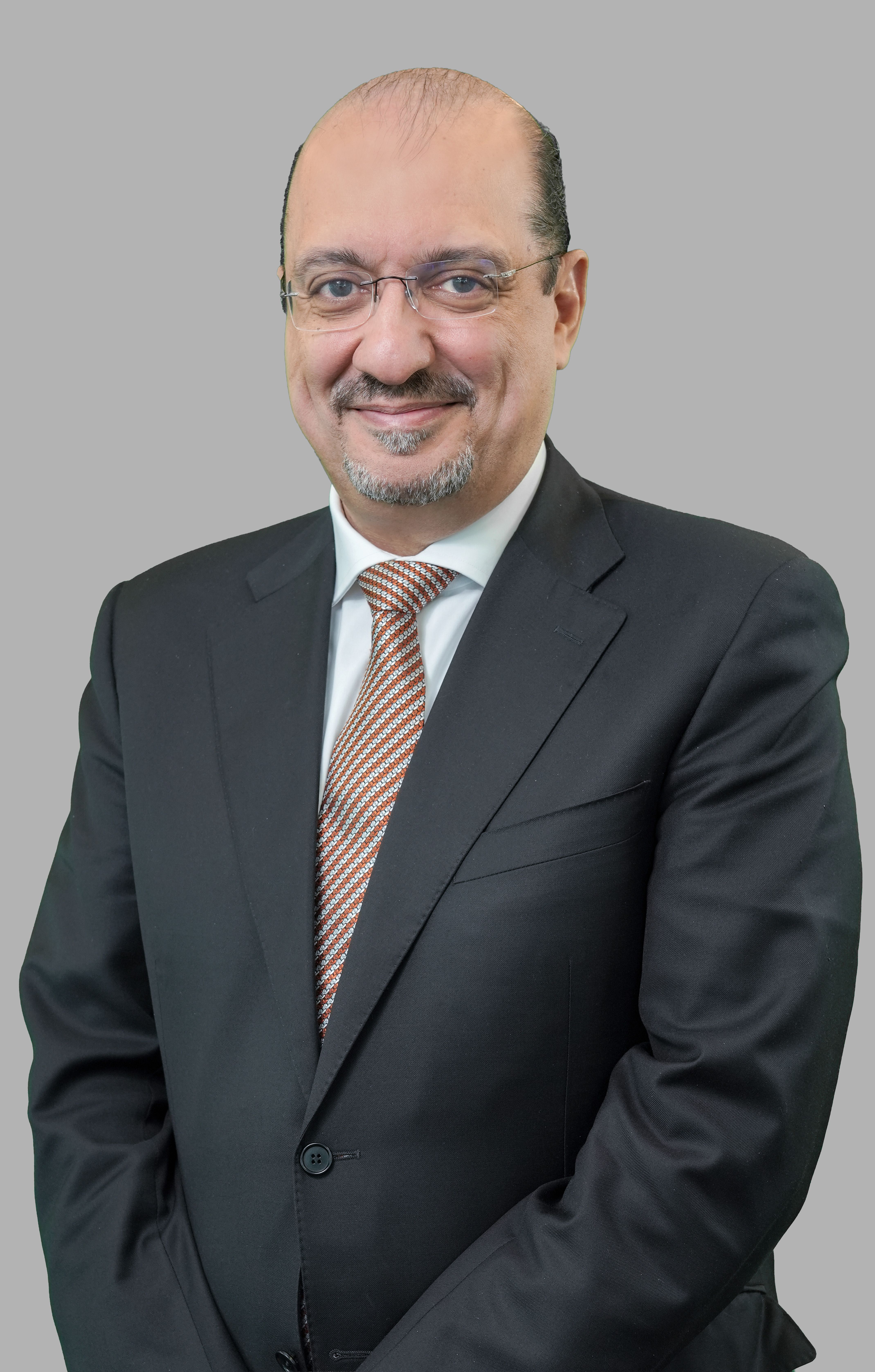
Against this backdrop, the Middle East is positioning itself as a serious contender for next-generation AI infrastructure, backed by energy scale, capital, and faster execution. In this interview, Mohamed Almasry, EVP for the Middle East and Africa at Hitachi Energy, unpacks why AI workloads are fundamentally different from anything grids have dealt with before, where the world’s most acute capacity constraints are forming, and what it will take for regions like the GCC to turn AI ambition into a reliable, long-term infrastructure reality.
AI data centres are emerging as one of the fastest-growing sources of electricity demand globally. From Hitachi Energy’s analysis, what makes AI workloads fundamentally different from traditional data centre demand when it comes to grid stress and reliability?
AI workloads combine very large power demand with rapid, unstable load behaviour, which puts new pressure on the grid. Traditional data centres typically operate at 1 to 10 megawatts with steady demand. AI data centres are built on a much larger scale, typically ranging from 100 to 500 megawatts, with some approaching a gigawatt, driven by energy-intensive training, higher rack densities, and cooling requirements.
The primary challenge is the rapid fluctuation of demand. Training AI involves supplying algorithms with large, carefully curated datasets so they can learn to identify patterns, generate predictions, and continuously improve their accuracy through repeated cycles of feedback and refinement. These fast swings make it harder to manage frequency, voltage, and power quality, which is why some operators classify AI data centres as non-conforming loads, meaning they don’t behave like normal, predictable power users.
Your white paper points to a growing mismatch between AI ambitions and grid capacity in North America, Europe and parts of Asia. Where are the most acute bottlenecks appearing, and how serious is the risk of delays or outright refusals for new AI projects?
The tightest bottlenecks are in regions where AI data centres are clustering fastest. In Europe, grid capacity is near its limits in hubs like Amsterdam, Frankfurt, and Dublin. In parts of Asia, including Tokyo and Mumbai, developers are securing power years in advance. In North America, similar clustering is pushing some regions to capacity, while China is shifting AI infrastructure west to ease constraints in eastern cities.
The main risk is delay rather than cancellation. The IEA estimates up to 20 per cent of data centre capacity could face connection delays between 2025 and 2030. AI projects move quickly, while grid permitting can take five to ten years and delivery of equipment like transformers now takes two to four years. As a result, some operators are capping capacity or tightening connection rules by classifying AI data centres as non-conforming loads. Access to power is becoming the binding constraint, and even on-site generation cannot be built fast enough to match AI deployment.
The GCC is increasingly being positioned as a viable home for hyperscale AI infrastructure. What specific factors give the region an edge in supporting 100 to 500 megawatt data centres at scale?
The GCC’s edge comes from combining large-scale energy availability with fast, integrated infrastructure delivery. Proximity to generation matters for AI data centres, as existing grids were not designed for AI’s scale or volatility. The region can site facilities near power sources, including renewables, improving reliability and reducing congestion.
Financing and execution are also critical. Sovereign wealth funds can directly support multi-gigawatt compute, grid, and generation projects, avoiding delays seen elsewhere. This is reinforced by regional grid interconnection and access to large sites near high-capacity transmission corridors. AI is also a national priority across the Gulf, enabling faster permitting and long-term planning around hyperscale demand.
You highlight extreme load volatility during AI model training, with demand jumping sharply within seconds. How should grid design, transmission planning and storage strategies evolve to handle this new reality?
Grids can no longer treat AI data centres as steady loads. AI training creates fast, industrial-scale demand swings, requiring more power electronics, digital controls, and power-quality technologies to maintain stability. This is driving demand for high-voltage switchgear, disconnectors, and generator circuit breakers designed for dynamic operation.
Transmission planning needs to shift from one-off connections to cluster-based approaches, while storage and flexibility must become core infrastructure. Battery energy storage is essential on-site and on the grid to smooth rapid load changes, especially where AI is paired with renewables. Technologies like STATCOMs, voltage regulators, and harmonic filters are increasingly important to protect equipment and maintain power quality, which is why AI energy hubs are emerging to support grid stability rather than strain it.
Saudi Arabia and the UAE are pushing to align national AI strategies with energy and grid expansion plans. How important is this policy coordination in attracting long-term AI investment, and where do you see gaps that still need to be addressed?
This coordination is essential for sustained AI investment, and while countries such as Saudi Arabia and the UAE share ambitious AI aspirations, it reinforces the need for each to pursue strategies tailored to their own national priorities and local contexts. Saudi Arabia is treating AI as critical infrastructure under Vision 2030, linking data centres to renewables and grid expansion. The UAE has closely integrated its AI strategy with its energy policy.
For investors, this alignment between AI strategy, energy planning, and grid development provides greater clarity and significantly reduces both connection risk and regulatory uncertainty. Saudi Arabia and the UAE are each advancing their own coordinated national strategies, just as any country would, providing long‑term clarity on power availability, infrastructure readiness, and policy direction. These parallel, locally driven efforts create the stability and predictability needed to attract multi‑year, high‑capital AI investments. At the same time, continued enhancement of long‑range, cluster‑level planning and further harmonisation of digital frameworks across the GCC region would provide even greater confidence for large‑scale, long‑term AI commitments.
For hyperscalers and investors evaluating AI projects in the Gulf, what practical lessons from Hitachi Energy’s global work should influence site selection and long-term infrastructure planning?
From our global experience, successful AI sites depend first on real grid readiness at scale. Hyperscalers need firm, long-term capacity commitments and clear grid reinforcement plans, not just initial connection offers. The Gulf’s advantage over long-queue markets only holds if expansion is planned early and aligned with AI demand. On-site solar and energy storage can also improve resilience and cost stability.
Regulatory certainty matters just as much. Sites in established digital or free zones with streamlined permitting significantly reduce execution risk. Long-term planning must also account for climate and scalability, including proven cooling solutions and grid designs that can grow toward the gigawatt scale. Finally, connectivity is critical. Proximity to subsea cables, internet exchanges, and talent ecosystems supports low latency today and long-term integration into regional AI infrastructure.
)
)
)
)
)
)
)
)
)
)
)
)
)
)
)
)
)
)
)

)

)
)
)
)
)
)

)
)
)
)
)
)
)

)
)
)
)
)
)
)
)
)
)

)
)
)
)