)
)
)
What is NVH?
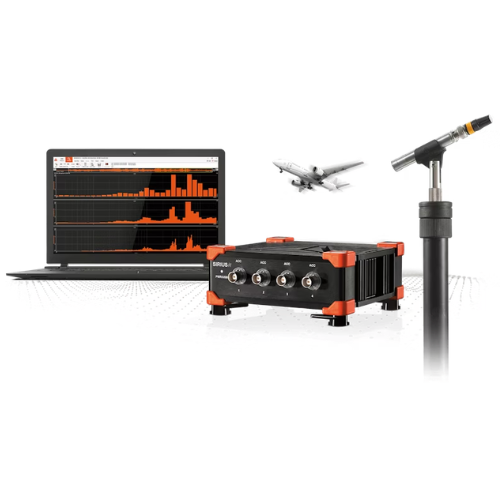
Noise, Vibration, and Harshness (NVH), also known as noise and vibration, is the study and modification of the noise and vibration characteristics of vehicles such as cars and trucks. While we can measure noise and vibration, harshness is a more subjective quality and is measured either via jury evaluations or with analytical tools that can provide results reflecting human subjective impressions (psychoacoustics).
NVH can be tonal such as engine noise (or powertrain noise), or broadband, such as road noise or wind noise. Basically, it is everything that drivers or passengers can either hear and feel from a vehicle while driving. Examples include wind noise, road noise, suspension bumps, or engine vibrations.
What is noise? Noise is unwanted sound or unwanted disturbance in an electronic signal. Acoustic noise is energy transmitted to the air that causes an audible disturbance. Tools such as acoustic intensity mapping and combustion/mechanical noise separation help identify the best methods of noise reduction.
What is vibration? Vibration is an oscillation that causes noise and disturbance. It is of concern due to its physical effects on people, electrical systems, and mechanical components. Shakers and controllers are commonly used to test vibration issues.
What is harshness? Harshness describes the severity and discomfort associated with vibration and noise. It is a qualitative assessment based on desired characteristics rather than purely quantifiable measurements.
NVH Testing NVH testing is widely used in the automotive industry for the reduction, design, and quality assurance of interior and exterior vehicle noise and vibration. It typically occurs during vehicle development for passenger cars and trucks.
Testing involves subjecting vehicles, components, or subassemblies to vibrations at different frequencies to determine mode shapes and isolate buzzes, squeaks, and rattles. Instrumentation includes microphones, accelerometers, force gauges, and load cells. Component tests often use vibration shakers, while full vehicles are tested on proving grounds or road simulators.
Facilities frequently include semi-anechoic chambers and rolling road dynamometers. Data is recorded using data acquisition systems.
Improving NVH involves reducing source strength, interrupting transmission paths, or absorbing energy. Common techniques include modal analysis, squeak and rattle tests, transfer path analysis, and more.
)
)
)
)
)
)
)
)
)
)
)
)
)
)
)
)
)
)
)

)

)
)
)
)
)
)

)
)
)
)
)
)
)

)
)
)
)
)
)
)
)
)
)

)
)
)
)